Older escalators and moving walks are at higher risk of incidents, so safety is always the first priority when considering an upgrade. At TK Elevator we are constantly adding to global best practices and adapting to customer feedback to reduce the risk of incidents.
Give your passengers a safe ride
Hardware-related safety devices
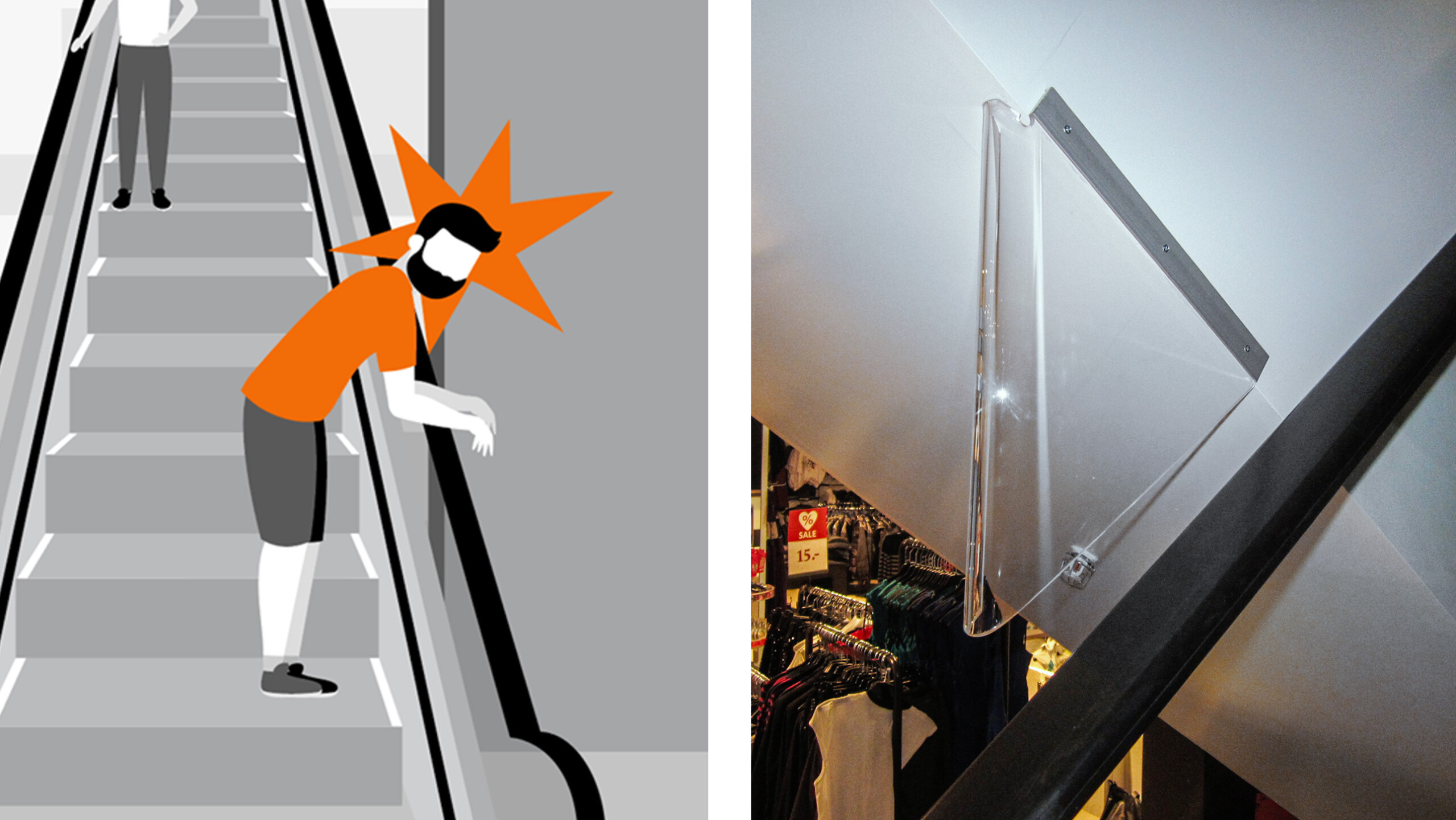
Building interfaces
The gaps between an escalator and the building are a potential accident risk. Integrating devices like deflectors and barriers helps to mitigate that risk.
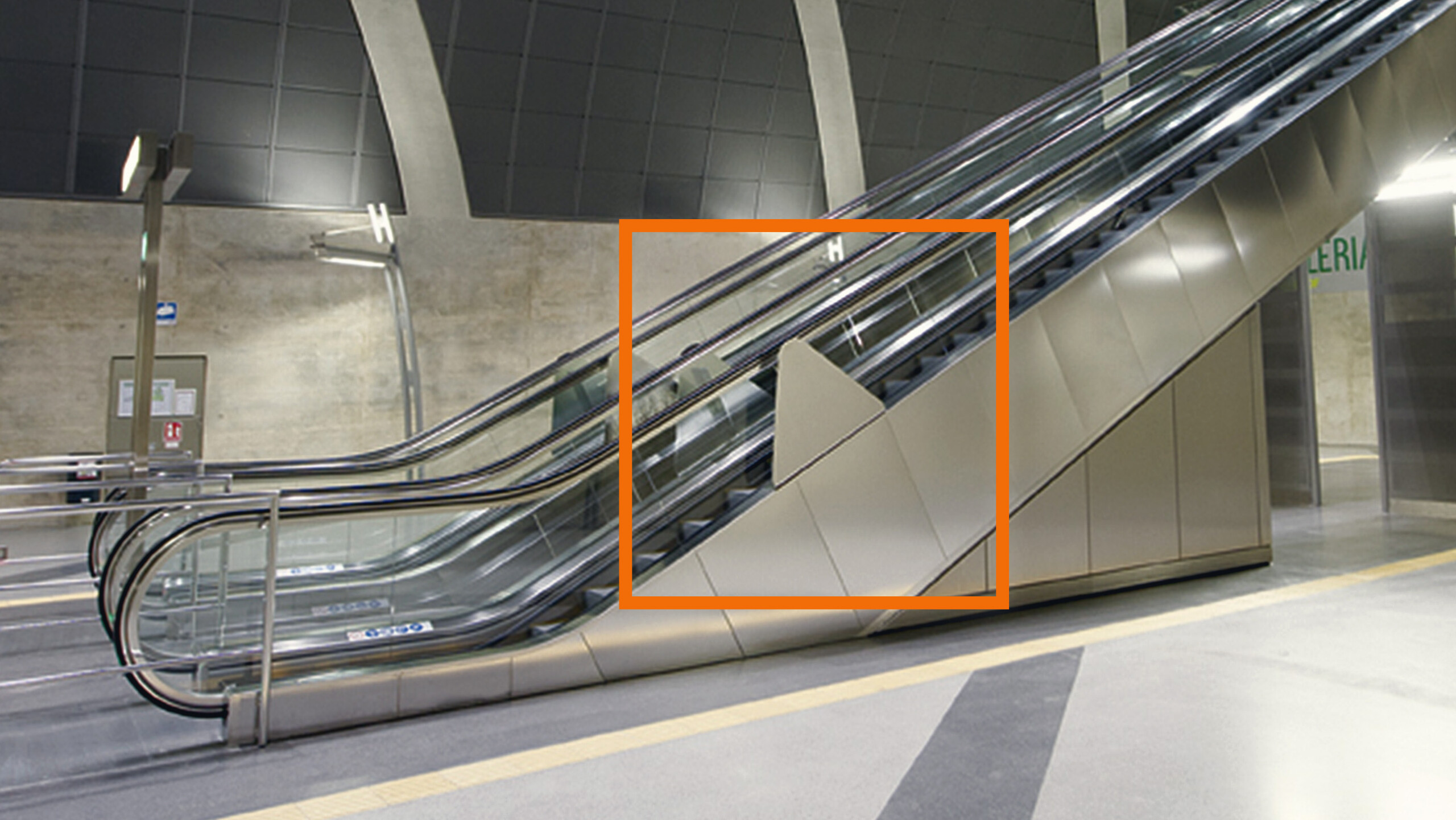
Anti-climbing deflectors
Anti-climbing deflectors installed at the bottom of an escalator. These structures safely impede anyone trying to climb on the outside of the balustrade.
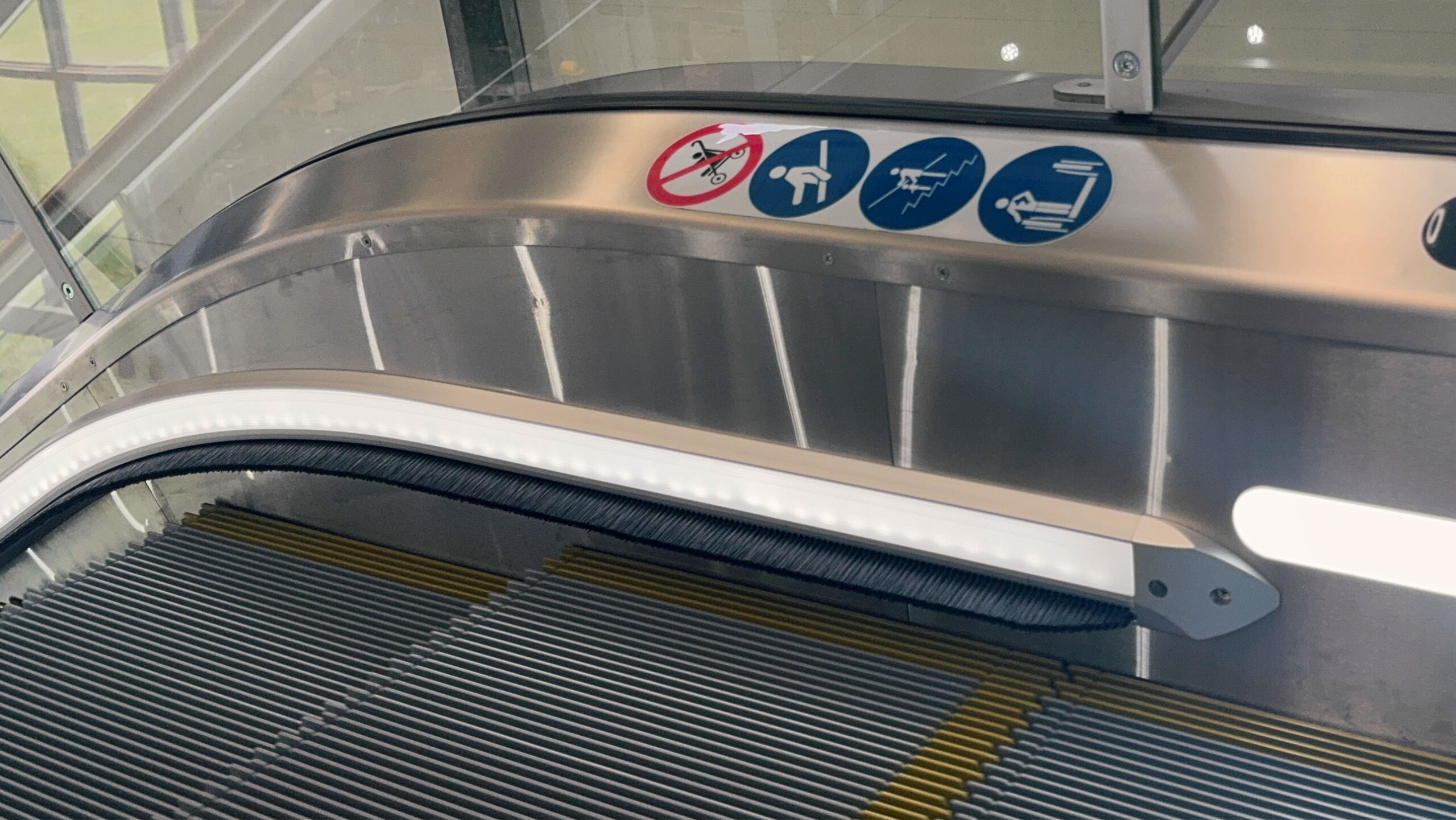
Skirt band brushes
Retrofitting skirt band brushes reduces the risk of people or objects becoming trapped in the gap between the steps and the skirting profile.
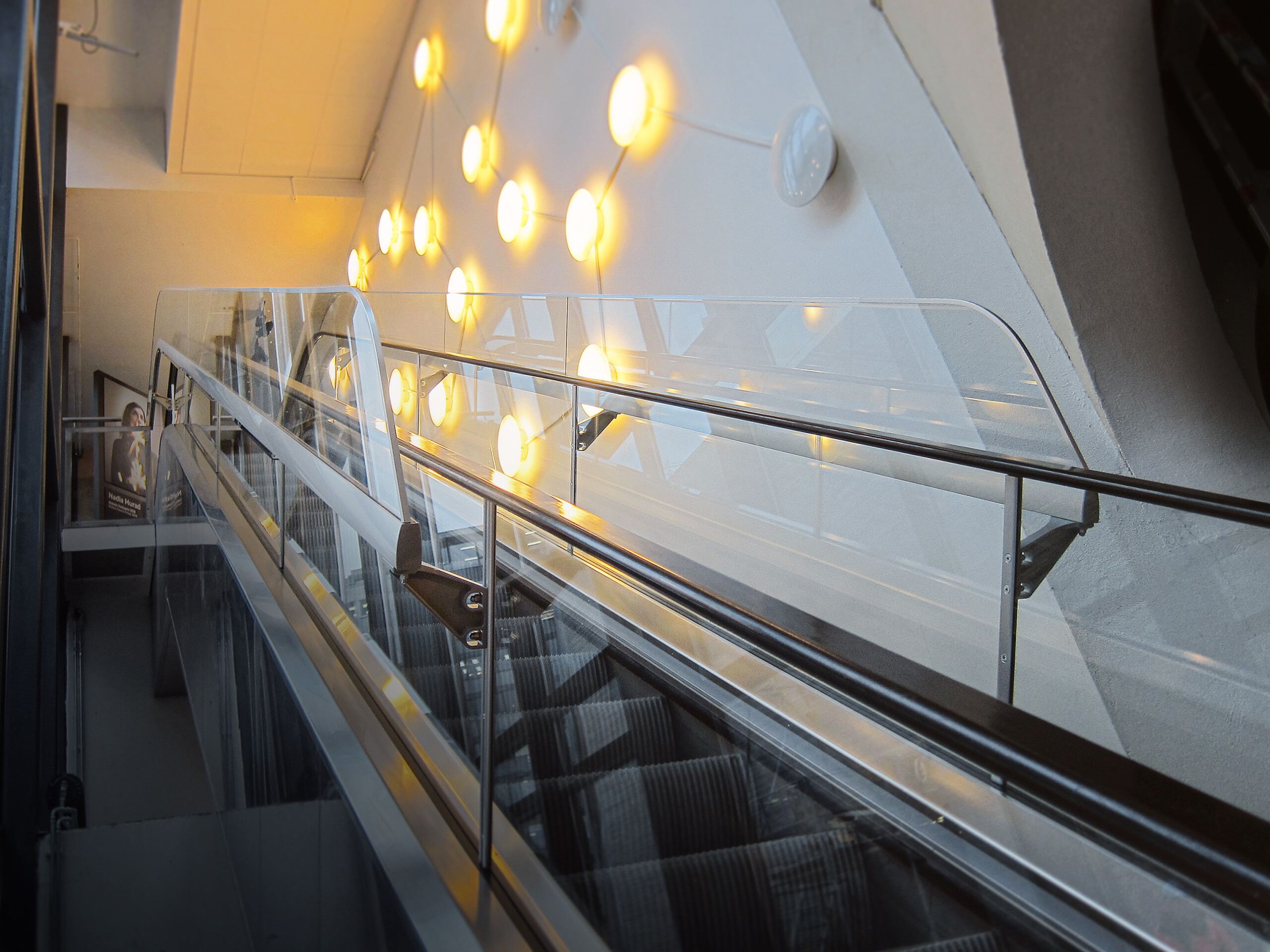
Anti-falling safety curtain
These are installed outside the balustrade and are higher than the handrail. They deter passengers from climbing over the side of the escalator and falling.
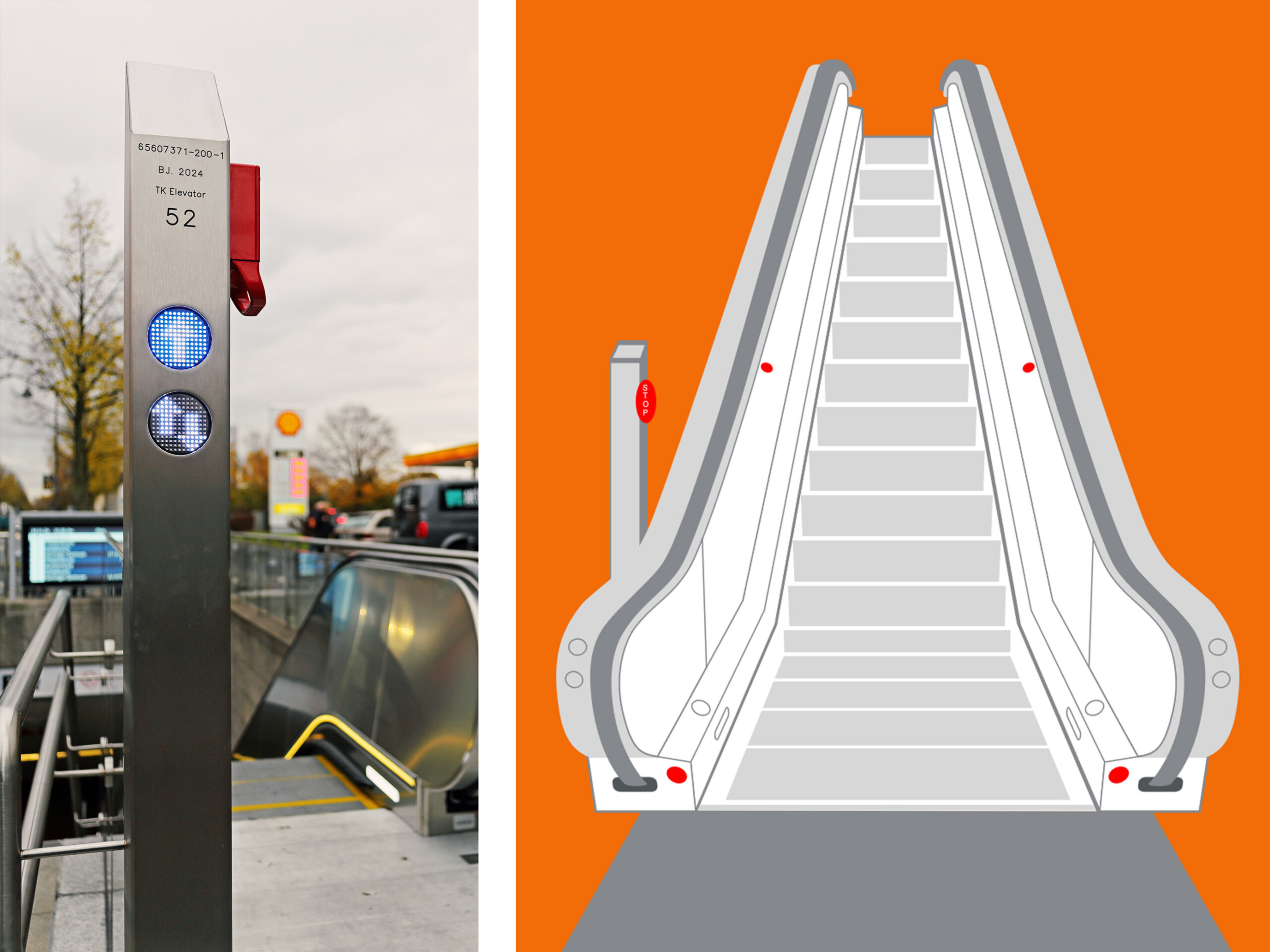
Safety signalling and emergency stops
Clear safety signals guide users, reduce the risk of accidents and ensure confident escalator use. They can also enable a quick response in critical situations by ensuring emergency stops are always within reach, enhancing passenger safety.

Controller-related safety devices
Safety & Performance Monitoring
Bring your escalator up to current safety standards by integrating new safety features on the controller side. Continuous monitoring of key escalator safety functions – such as handrail speed, drive speed, missing step or braking distance performance – ensures reliable and safe operation at all time. TKE’s manufacturer-independent replacement controller GEC supports all of these monitoring functions and many more.
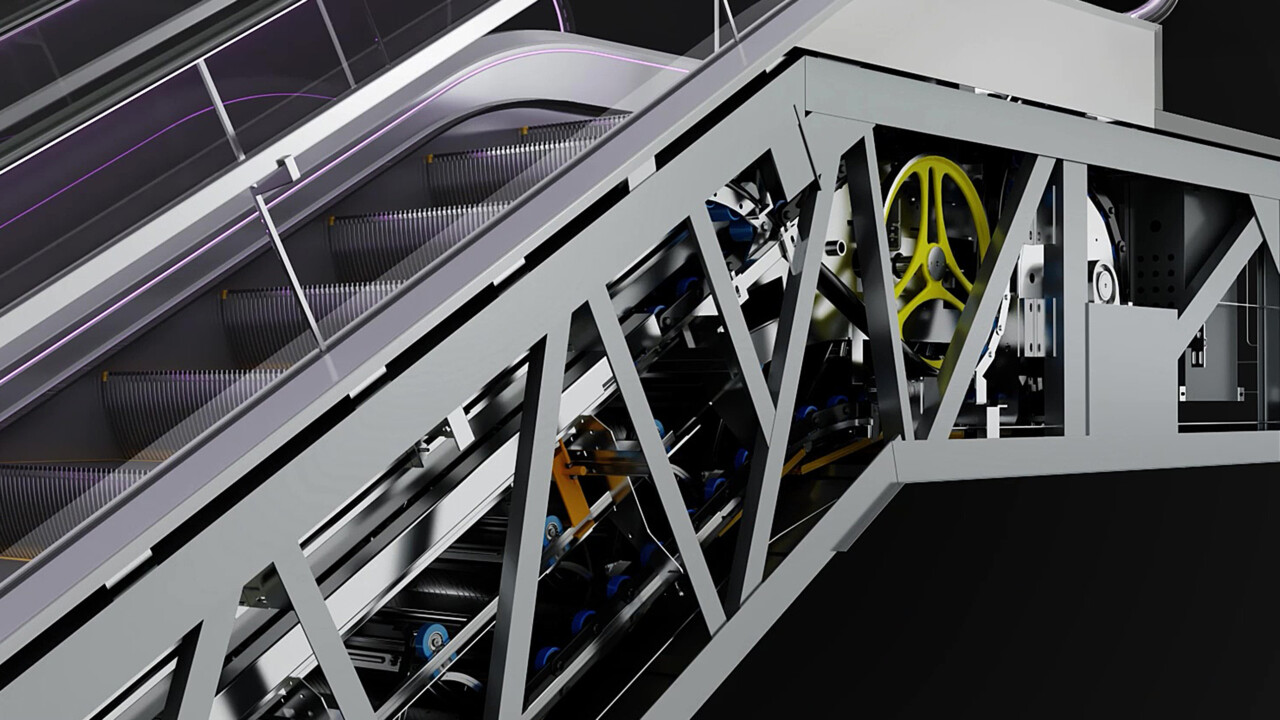
Main drive speed monitoring
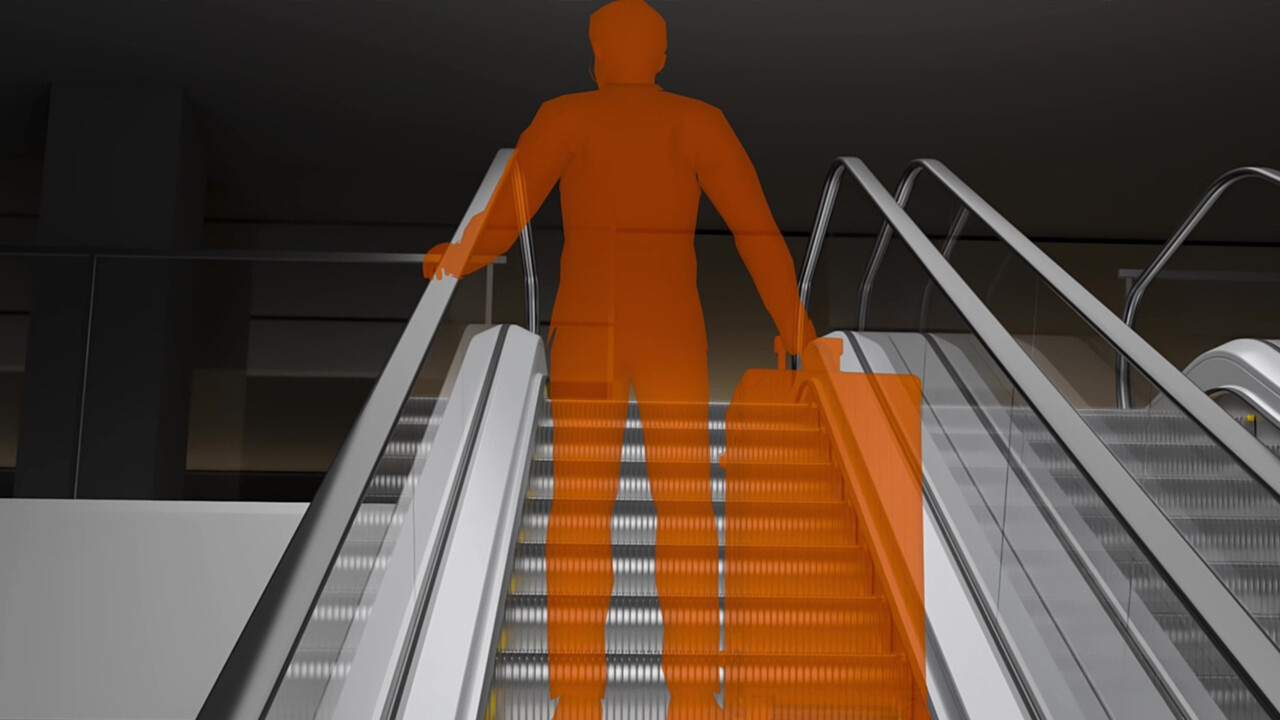
Handrail speed monitoring
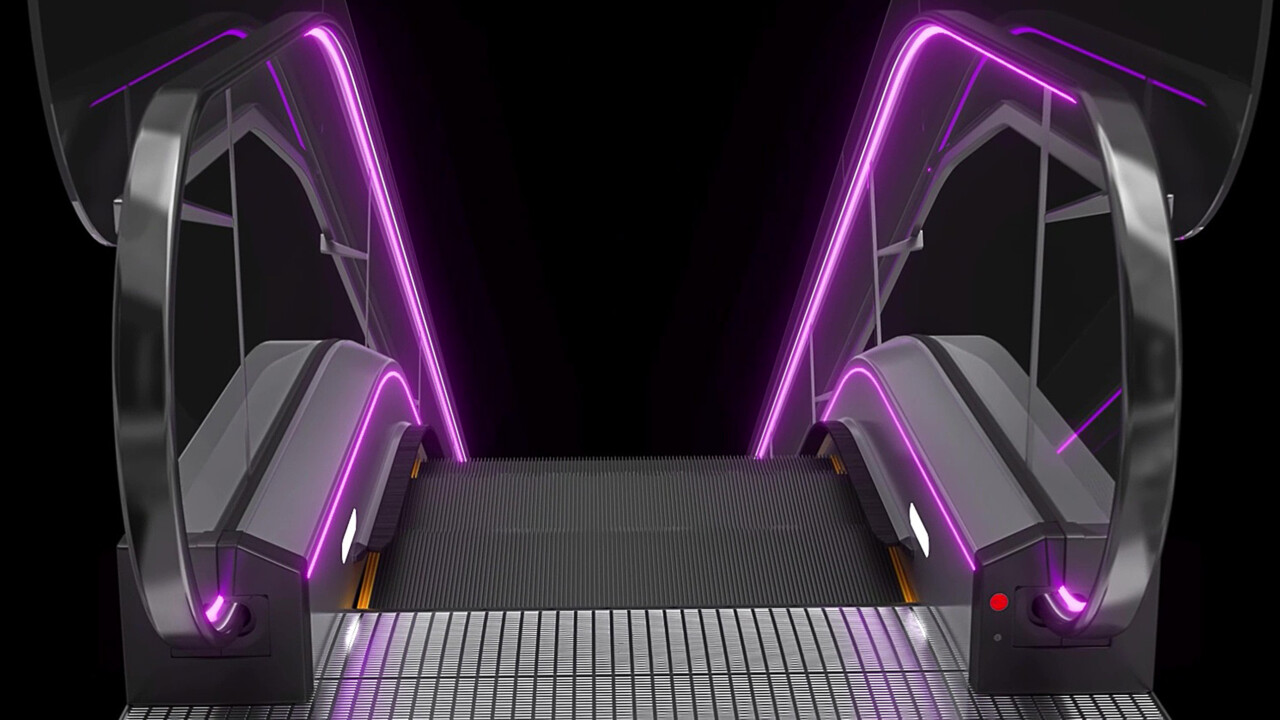
Braking distance monitoring
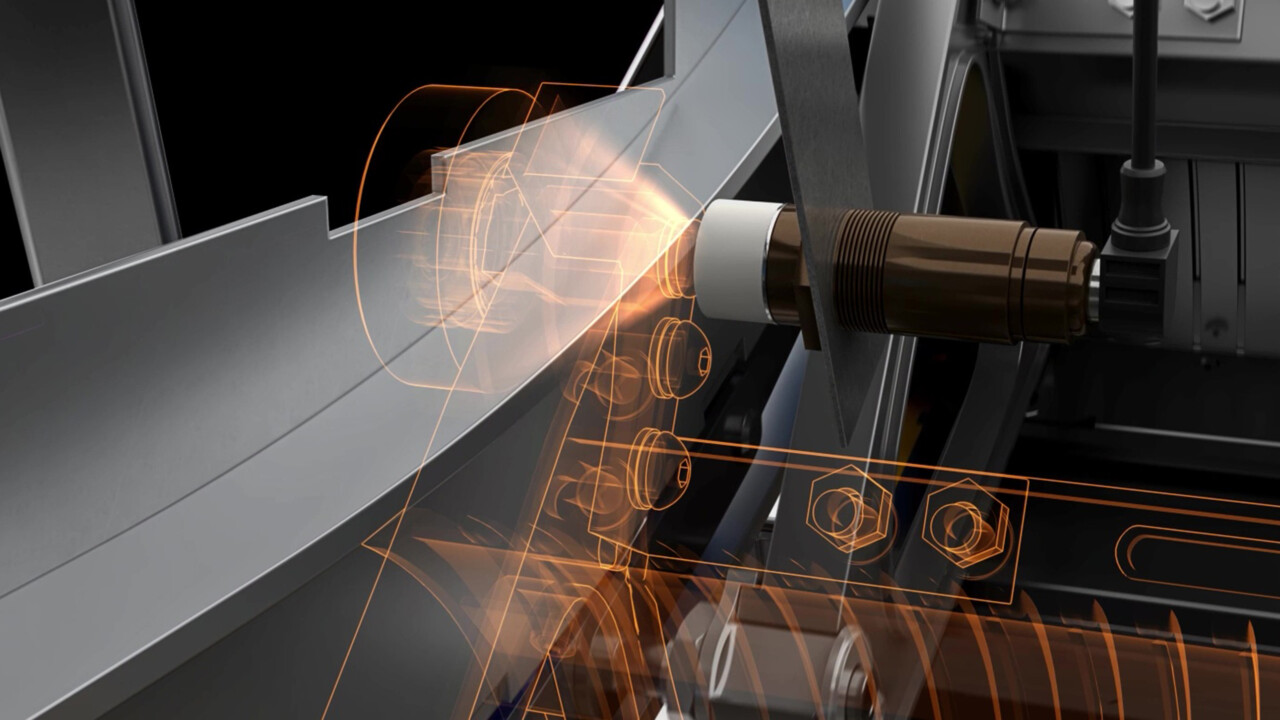
Missing step indicator
TKE-exclusive safety devices
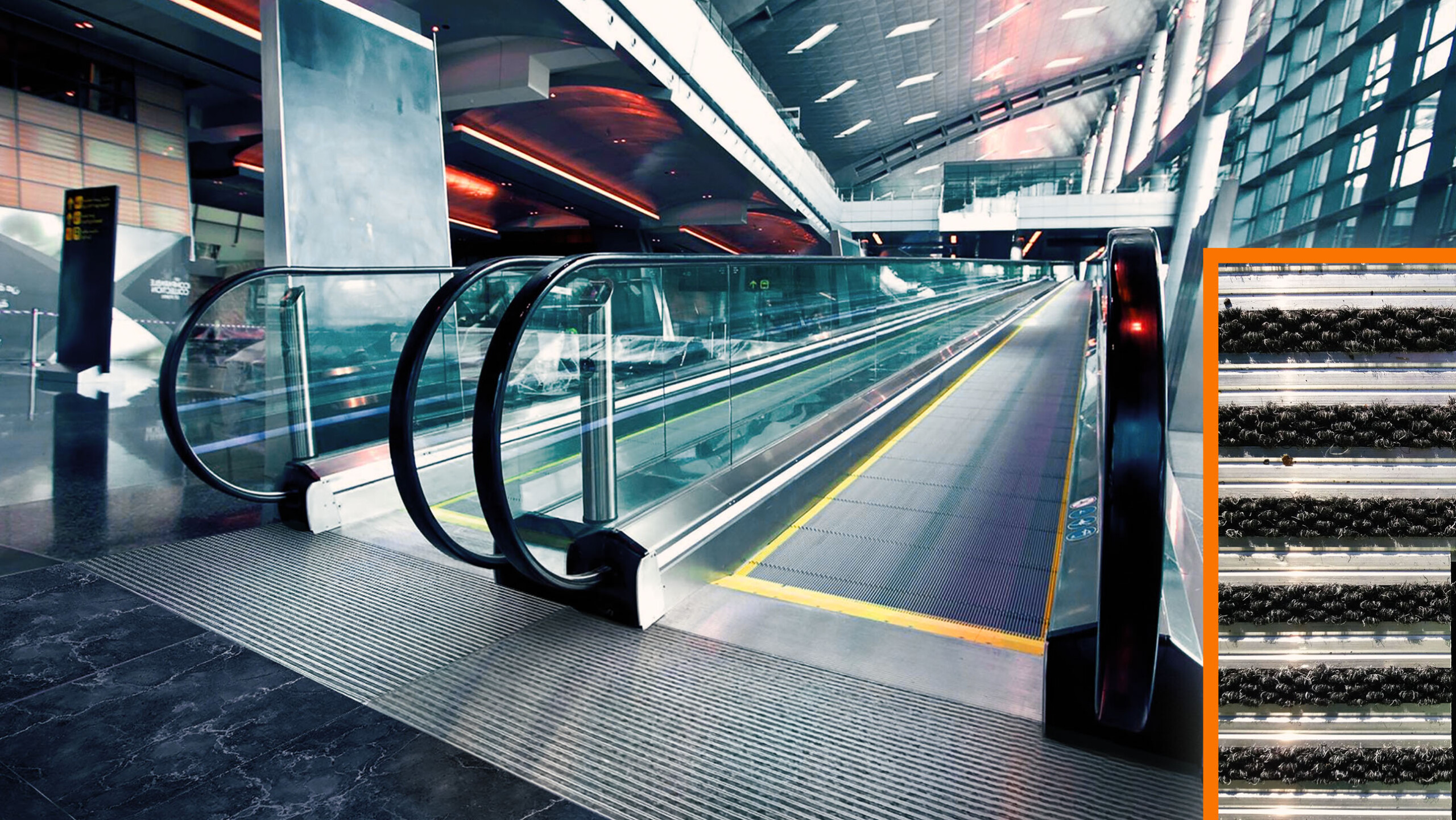
Mats on cover plates
Escalators become even safer for users when anti-slip mats are integrated on the cover plates. The risk of slipping or falling is significantly reduced.
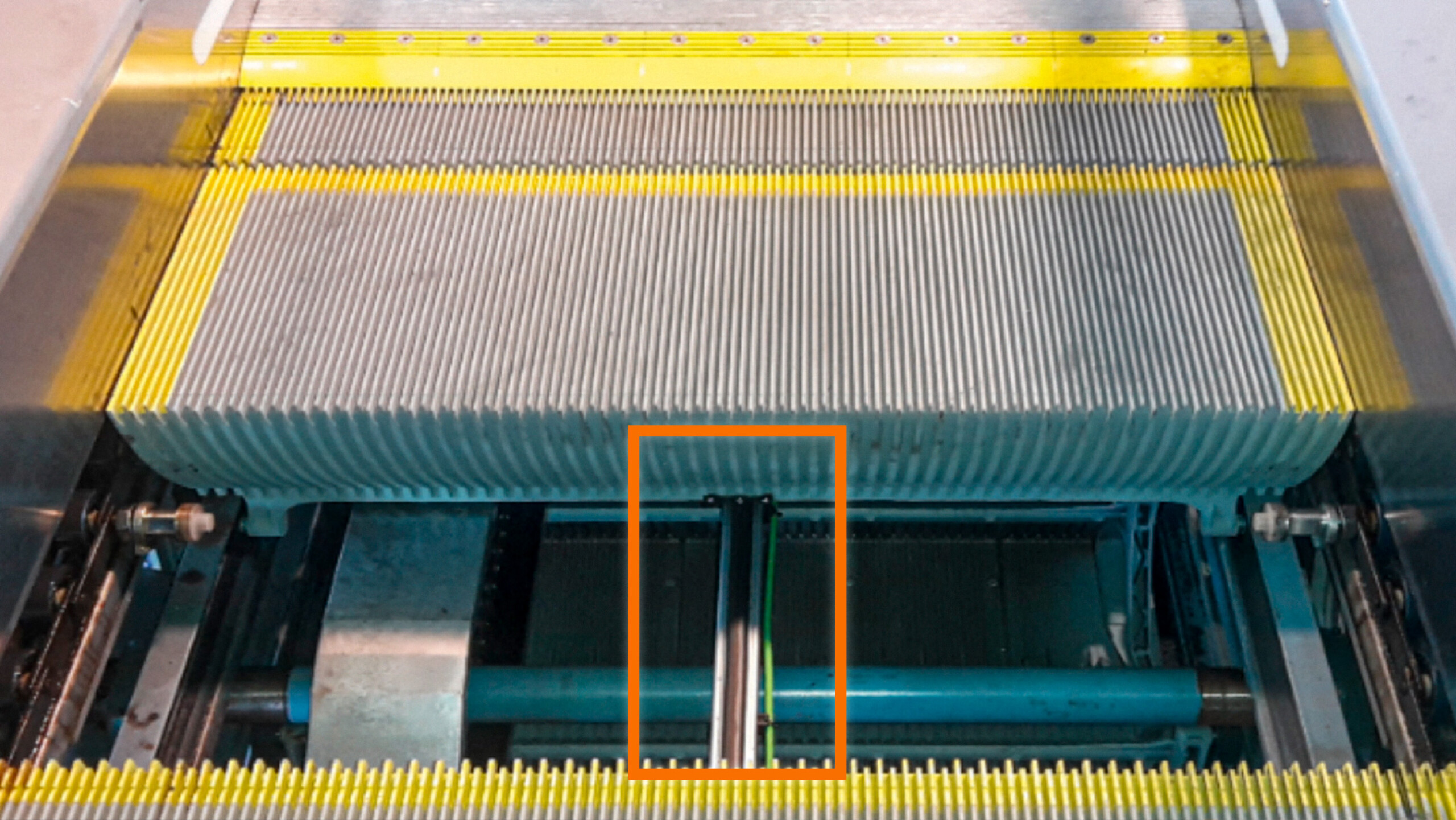
Continuous step/pallet monitoring
The collapse of an escalator step or moving walk pallet is a very rare accident, but its consequences can be severe. Our continuous monitoring solution that runs along the full length of the escalator prevents it from continuing to operate with a faulty step or pallet.